
Wellspring Structure & Governance
Wellspring Structure
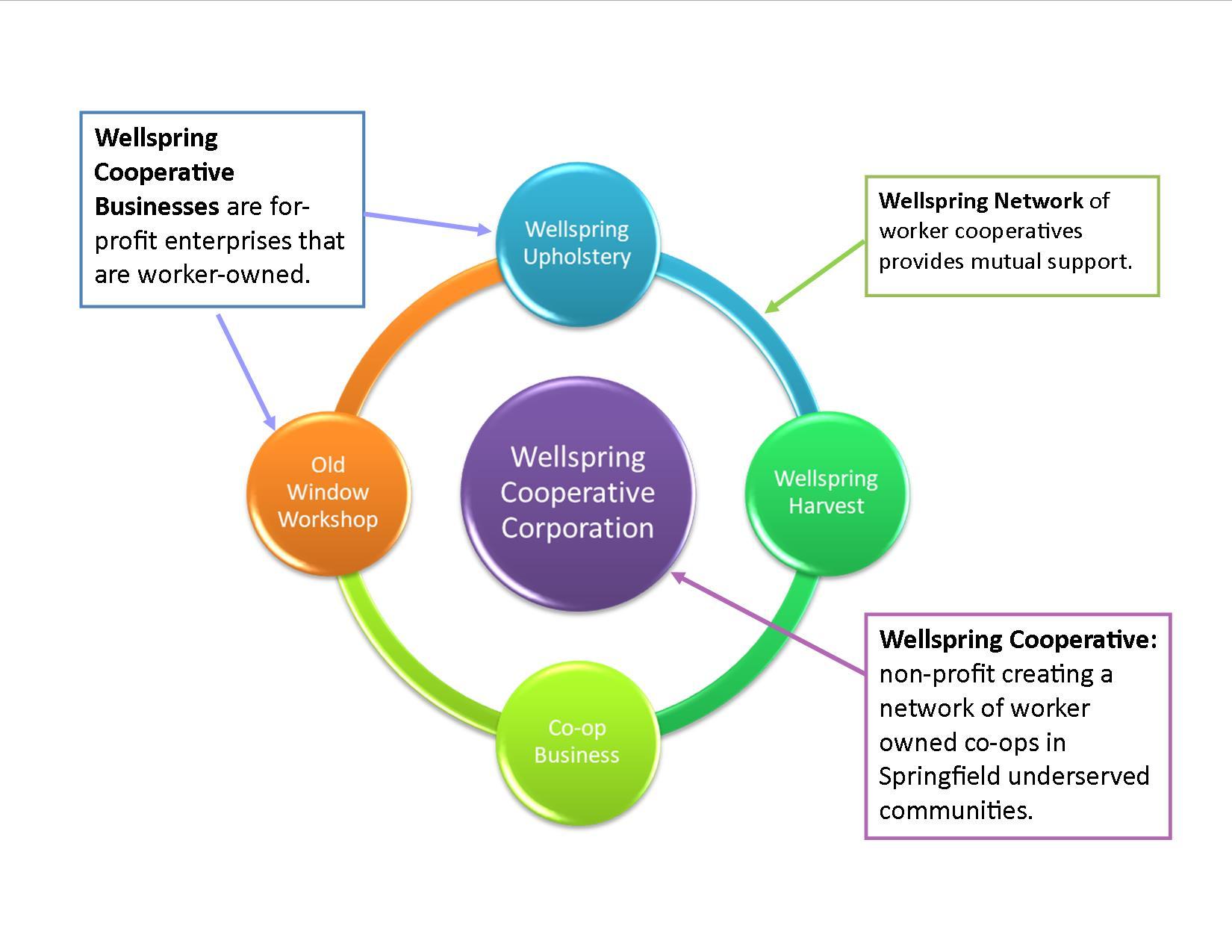
This diagram of Wellspring’s structure shows the Wellspring Cooperative Corporation (WCC) in the center of the Wellspring Cooperative Network (WCN), a network of for-profit worker cooperatives. The Wellspring Cooperative Network facilitates mutual support between its co-op members as well as support from WCC.
Wellspring Governance
General Assembly
Wellspring’s General Assembly is held towards the end of each year. It is a gathering for the entire Wellspring community – our members, supporters, volunteers, partners and those who are curious to learn more about our work. The General Assembly includes a ‘business’ component where members elect new Board members, decide on changes in big picture, strategic direction as well as bylaw policies. This is the highest level of decision making in our organization.
In addition to the business portion of the General Assembly, it is also a space to meet each other, build relationships, learn more deeply about our work, explore critical topics, and gather input from our members and community. All are welcome to attend.
Wellspring Board
From the outset, Wellspring sought to ensure that our Board of Directors represented key constituencies that we work with. Board seats are allocated by the following guidelines:
- Worker Cooperatives: 30% of Board seats are allocated for members of the Wellspring Cooperative Network
- Anchor Institutions: 20% of Board seats are allocated for representatives of Anchor Institutions which are Springfield area non-profits such as hospitals and colleges, that are anchored in place and committed to the welfare of their surrounding communities.
- Community and Labor Organizations: 20% of Board seats are allocated for representatives from local community organizations and labor groups/unions.
- Development & Support Organizations: 20% of Board seats are allocated for organizations that provide support for co-op and small business development including technical assistance, training, workforce development, and lending.
- Individual Community Members: 10% of Board seats are allocated for individuals who are not representing an organization but bring interest, energy and insights to the Board.